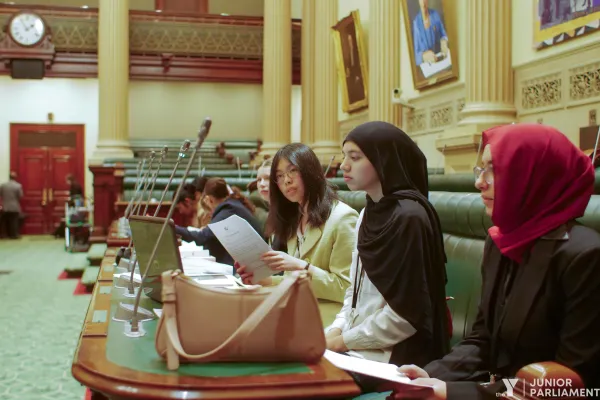
Young Leaders Take the Floor at Parliament House
In early October, a group of young South Australians stood up in Parliament House and debated laws they had written together. Two of those bills passed.
YMCA SA Junior Parliament, a program for young people aged 12 to 15, began with two days of training at the Adelaide Convention Centre. Participants learnt how democracy, government and parliament work; brainstormed ideas for their own bills; and built their public speaking and debating skills in two practice debates. Representatives from the Electoral Commission of South Australia also provided insight with a session on civic participation and elections.
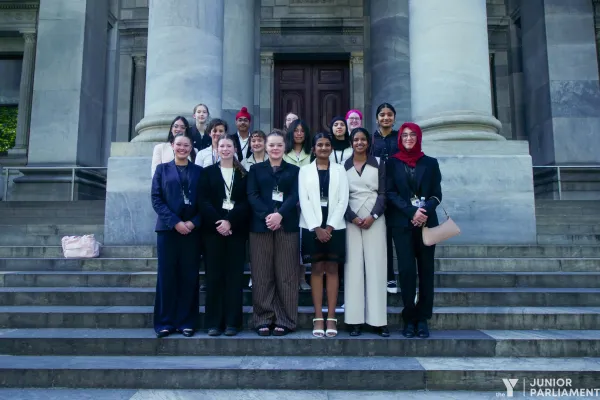
But it was not all speeches and debate. Participants played Arctic Survival (what would you take?), designed commemorative T-shirts and signed each other’s, and got up for a round of Just Dance. Participants came from across Adelaide, and one came from Waikerie in the Riverland. Some were returning from earlier years; some were recommended by teachers; others heard about the program through word of mouth. Three places were sponsored, and the program had the backing of Parliament House of South Australia, the Law Foundation of South Australia and the Electoral Commission of South Australia.
Then came Parliament House. The day opened with speeches from Youth Governor Madison Spencer, Hon Robert Simms MLC and Hon Olivia Savvas MP, Member for Newland; participants then split into government and opposition and got down to debating their bills.
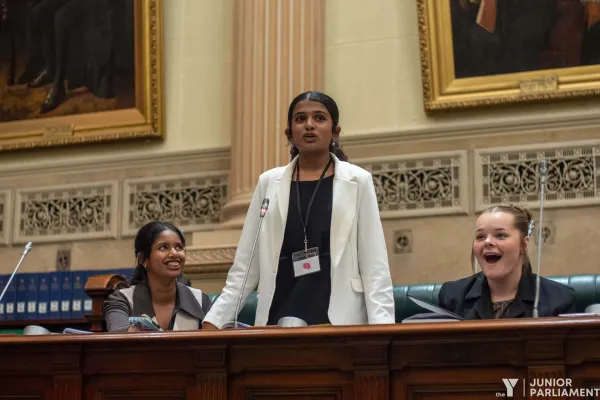
The government’s Caring for Carers (Hospitals) Bill 2026 passed 10 votes to 8. The idea behind it is simple: to support young people in hospital, you have to support their carers. Parents and carers who stay overnight often go without meals or a place to sleep; the bill provides both, along with support groups and resources co-designed by young people who have used the health system.
The opposition’s Omnibus Transport Bill 2026 passed 15 votes to 3, and it covers a lot of ground. It provides for security guards and transport police trained in disability support; more accessible and convenient buses; a public transport safety committee; and a wider, more frequent Adelaide Metro and MetroCard network. It also sets up an education campaign so young people know how to use public transport.
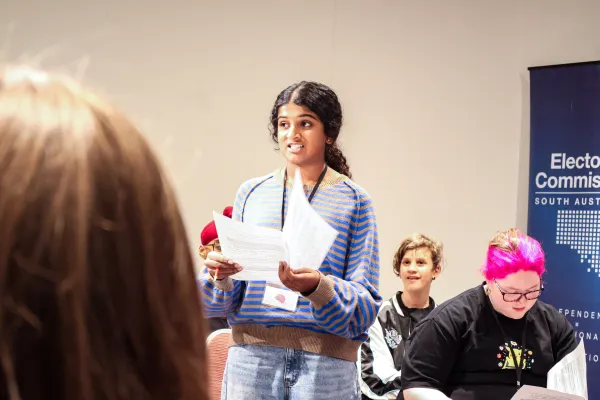
Both bills began as ideas at the training days. One Junior Parliament participant commented, “I enjoyed experiencing the life cycle of a bill, from brainstorming to debating it and then voting on it.”
The Youth Governor’s Motion of Public Importance put a big question to the house: should generative artificial intelligence be banned from primary and secondary schools? The answer was yes, 16 votes to 2. The day ended on a lighter note, with a motion for all cutlery to be made of wood; the house voted it down, 14 votes to 4.
Junior Parliament and Youth Parliament are two of the ways the Y puts its mission into practice, giving young South Australians a say on the issues that matter to them and real experience of leadership and responsibility.